The Women Leading the Next Chapter of Malaria Case Management in Equatorial Guinea
April 24, 2026
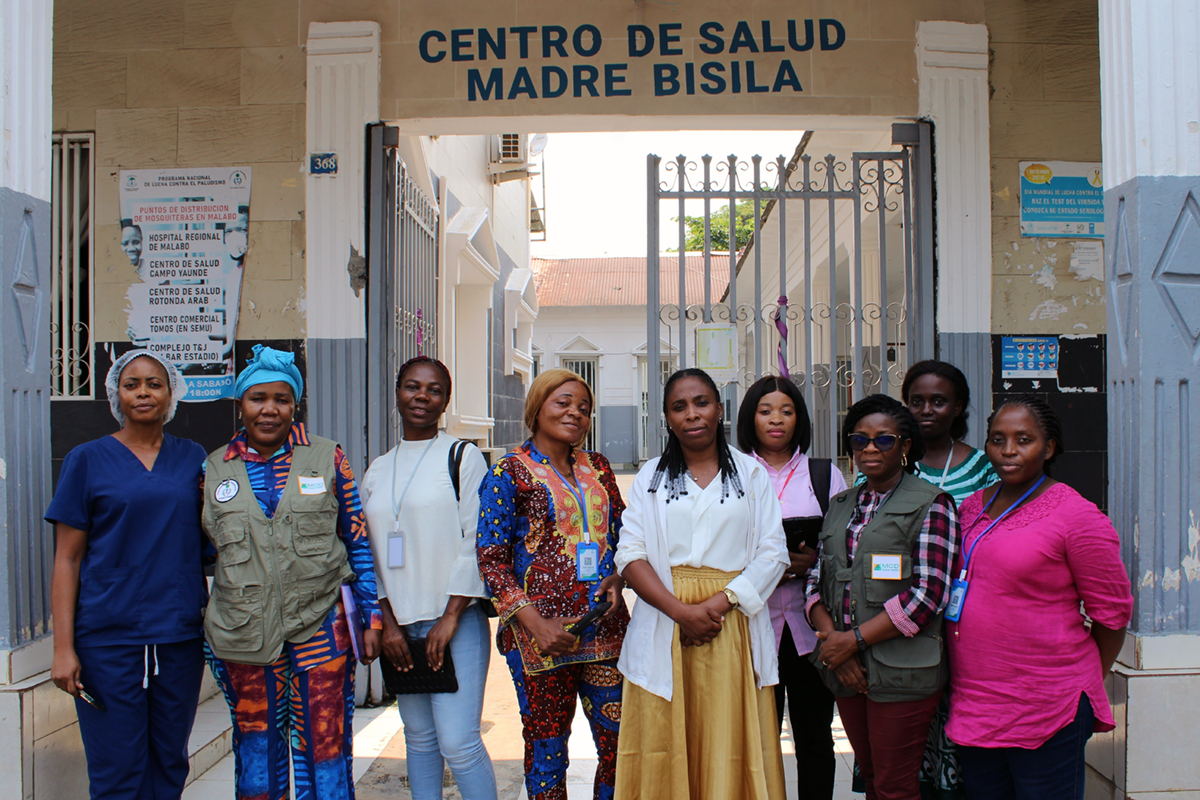
Pictured from left to right: Isabel Oyana Owono Oyana, Elizabeth Nyakarungu, Rosalía Abuy Owono Nzang, María Jesús Mbengono Obiang, Luciana Abeng Alogo, Pastora Felisa Alene Nguema, IniAbasi Nglass, Josefina Elomba Endje, Solange Yessica Elobé Ebiaca.
From the lab bench to the clinic to national policy, a group of women is strengthening how malaria is diagnosed, treated, and tracked, so more families get quality care, every time.
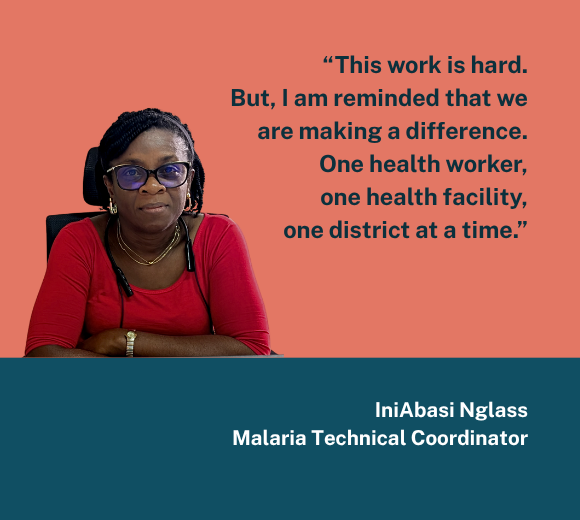
Early in her career, Malaria Technical Coordinator IniAbasi Nglass watched a mother lose two young children to severe malaria within a single week in a rural area of Nigeria. The nearest facility had run out of rapid diagnostic tests, and the family could not afford transport to the district hospital.
“That experience stayed with me,” she said. It also sharpened her conviction that malaria is as much a problem of access and health system strength as it is a diagnosis.
Across Equatorial Guinea, women, like IniAbasi, are helping drive a practical shift: improving the everyday decisions that determine whether a child with fever is tested correctly, treated according to guidelines, and recorded in the data that informs next steps. Their work spans national leadership, laboratory diagnosis, clinical case management, and community coordination, connecting policy to the realities of care across all regions of the country.
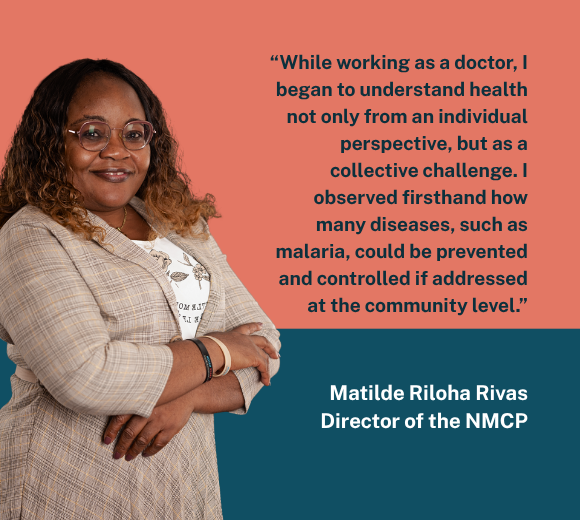
At the center is Matilde Riloha Rivas, director of Equatorial Guinea’s National Malaria Control Program (NMCP). After years working as a physician on Bioko Island, she says that she “began to understand health not only from an individual perspective, but as a collective challenge.” Over the past year, Matilde is most proud of strengthening unity across the program and being part of the team who helped secure the continuation of malaria efforts for the next five years, especially at a moment when uncertainty increased pressure on teams and families alike.
“There was great concern that two decades of effort might be interrupted,” said Matilde. “Being part of that team was a true honor and a great responsibility.”
The new phase of the Bioko Island Malaria Elimination Project (BIMEP), a project of MCD Global Health and implemented in partnership with the Ministry of Health and NMCP, extends sustainable malaria interventions to the mainland region and Annobón island, an important milestone for case management services across the country.
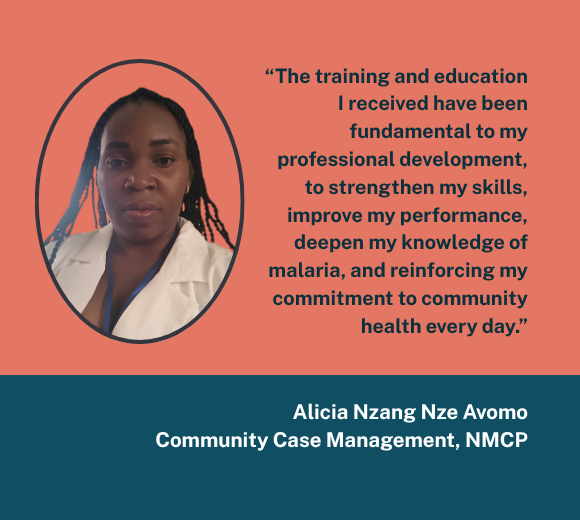
Alicia Nzang Nze Avomo, who coordinates community case management in the mainland region for NMCP, describes how on-site experience deepened her commitment to strengthening malaria services. “It was then that I understood that the impact of the disease was real and that our actions were not as effective as they should be. It sparked a desire to improve malaria management in our communities.”
She also focuses on a less visible but essential part of effective quality care: reliable data. Through consistent follow-up with district health officials and shared coordination, she says the team successfully consolidated mainland region data for 2025, surpassing the results of previous years. Better data means faster course-corrections, including where and how to deploy training and support health facilities and their staff to reduce gaps in diagnosis and treatment.
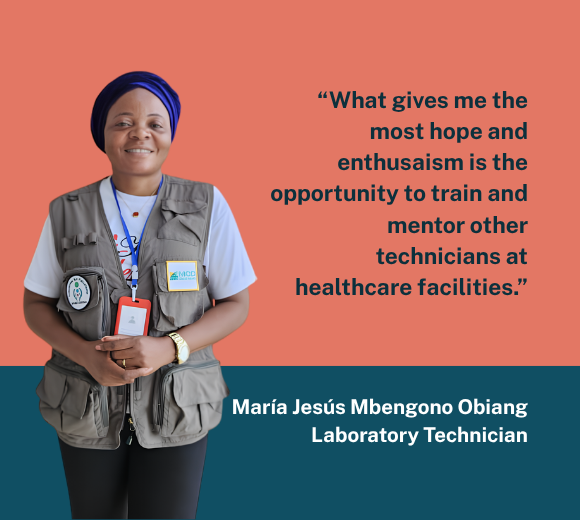
For laboratory teams, quality is personal. María Jesús Mbengono Obiang, now responsible for malaria diagnosis in the mainland region, has spent more than two decades in healthcare and chose the laboratory path because she believed “accurate diagnosis can save lives.”
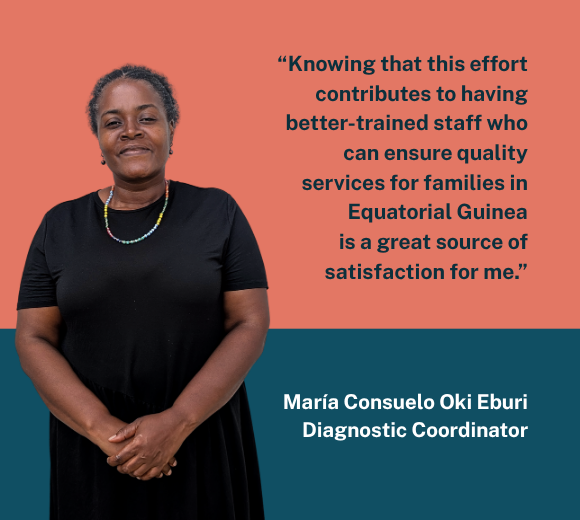
Diagnostic Coordinator María Consuelo Oki Eburi has helped train district trainers and supervisors so they can train others, creating “a multiplier effect that strengthens the healthcare system,” she said. Together, their work helps turn national standards into consistent practice, so patients are more likely to receive the right test and the right treatment, regardless of where they seek care.
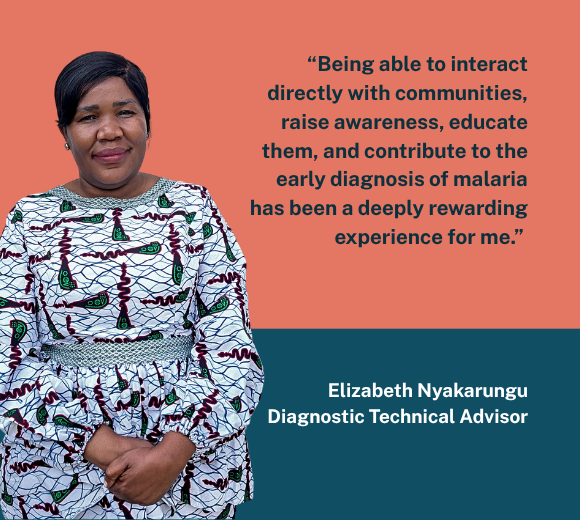
That connection between technical excellence and human experience is echoed by Elizabeth Nyakarungu, diagnostic technical advisor, with decades of malaria experience, and who grew up near Lake Victoria and endured multiple bouts of malaria as a child.
“This work is not just a job for me, but a calling,” she said. Her outreach work, from community education to early diagnosis, reflects what many of these women describe: progress is built one facility, one training, and one patient interaction at a time.
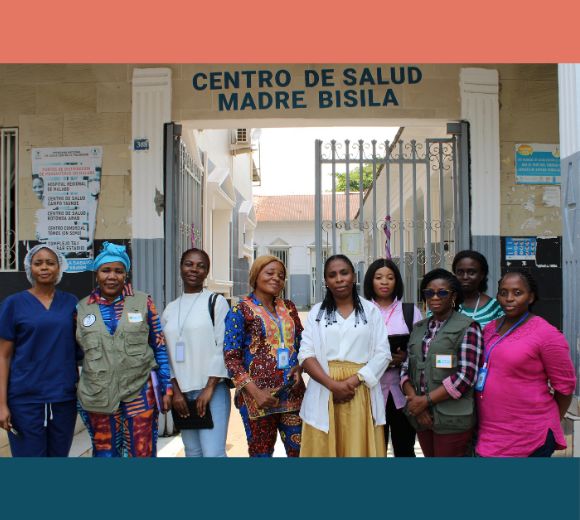
As Equatorial Guinea advances toward its 2030 vision, these women are helping build the foundations that last: skilled health workers, stronger supportive supervision and mentoring, and information that can guide decisions in real time. Their leadership is not a side note; it is embedded in the work itself from the national table where plans are set to the health center where fever is assessed.
On World Malaria Day and beyond, their stories are a reminder that eliminating malaria depends on systems that work and the people who make them work every day.
Thank you to all the women interviewed for this story: Alicia Nzang Nze Avomo, Elizabeth Nyakarungu , IniAbasi Nglass, Josefina Elomba Endje , María Consuelo Oki Eburi, María Jesús Mbengono Obiang, María Piedad Ada Esono Angono, Matilde Riloha Rivas, Olga Isabel Avomo Esono, Rosalía Abuy Owono Nzang, Sandrina Makosso Mepango , and Solange Yessica Elobé Ebiaca.
About the Bioko Island Malaria Elimination Project
MCD Global Health’s Bioko Island Malaria Elimination Project (BIMEP), in collaboration with the Ministry of Health and the National Malaria Control Program (NMCP) of Equatorial Guinea, is an award-winning, public-private partnership on Bioko Island, Equatorial Guinea, that began in 2004 as the Bioko Island Malaria Control Project (BIMCP). Since then, the project has grown and evolved with the goal of eliminating malaria from the island and strengthening the country's health systems and workforce.