Overcoming Challenges to Maintain Malaria Health Services
August 4, 2026
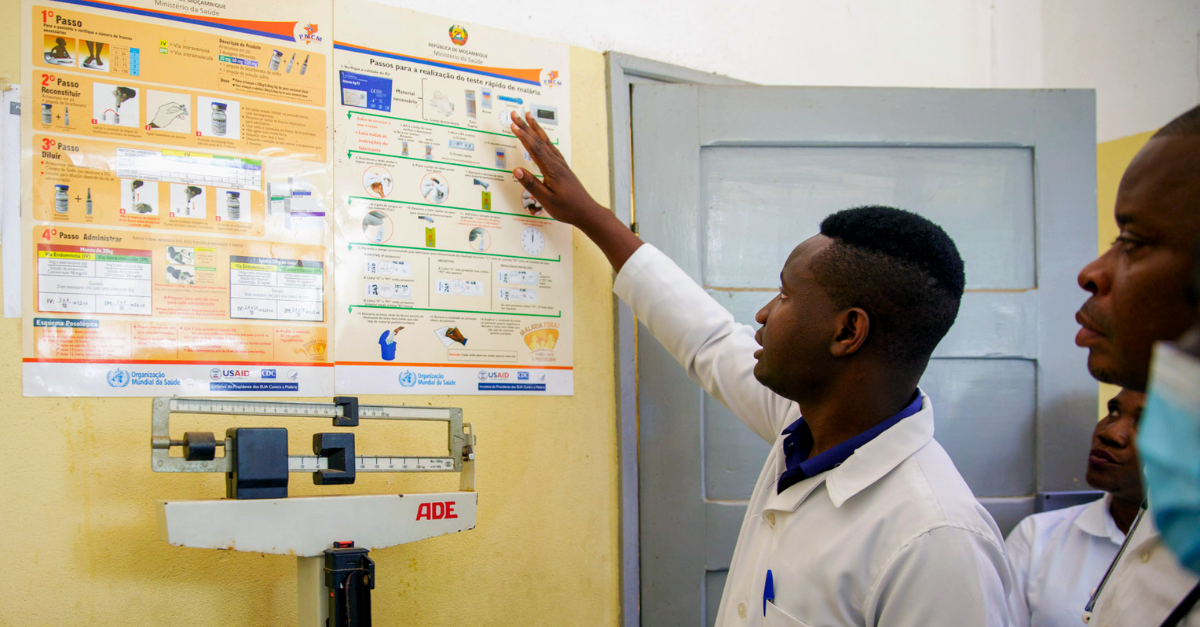
MCAPS staff providing technical support at the health facility level during an integrated supervision visit in Mozambique.
In 2025, MCD Global Health (MCD)’s Malaria Capacity Strengthening (MCAPS) Program in Mozambique was affected by the U.S. government stop-work order, resulting in reduced funding and significant operational challenges.
Alarm bells rang. With Mozambique among the five countries accounting for nearly half of all global malaria cases, according to the World Health Organization’s 2025 World Malaria Report, the MCAPS team rapidly adapted its approach, prioritizing flexibility, data-driven decision making, and collaboration to maintain lifesaving services where it was needed most.
A core MCAPS strategy is integrated supervision, which includes training, coaching, and mentoring of health workers. In response to constraints, the team shifted from visiting all facilities to focusing on districts with a higher burden of disease and lower-performing health facilities. Supervision combined targeted in-person visits with phone-based follow-ups, allowing health workers to continue receiving guidance and mentorship even when travel was limited or resources constrained.
Using Data to Prioritize
Key indicators, including malaria cases, severe cases, and malaria-related deaths, were used to prioritize districts and facilities. Supervision data on adherence to testing, treatment, and reporting protocols further identified facilities most in need of support. This approach ensured that limited resources were focused on where they could have the greatest impact.
The team experienced frequent logistical challenges. For example, heavy rain often blocked roads, making in-person visits difficult or impossible. Phone-based followups complemented on-site supervision, enabling continuous support despite travel barriers. Additional constraints, including funding limitations, elections, and staff availability, required careful coordination among MCAPS technical teams, provincial and district staff, and monitoring and evaluation teams to determine where and how support could be delivered.
This collaborative adaptation proved effective. By combining data-driven prioritization with flexible planning and remote support, MCAPS maintained supervision and mentorship despite significant disruptions. Focusing on high-burden areas and underperforming facilities allowed the program to use reduced resources efficiently while sustaining service quality.
Impacts of Adaptation
Despite fewer supervision visits, outcomes remained strong. About 80% of health workers correctly followed malaria case management steps; nearly 80% performed rapid diagnostic tests correctly; and more than 75% prescribed appropriate treatment. Identified gaps, such as managing complex cases and caring for pregnant women, were addressed through targeted mentoring. Ten laboratories testing quality and standard procedures.
Data quality has also improved. Reporting completeness and timeliness exceeded 99% across all three project provinces, and 92 district-level and two provincial-level data review meetings used malaria data to guide decisions on service delivery and resource allocation.
These adaptations helped sustain quality care for patients and families in a challenging, resource-constrained context. Providers remained supported in clinical decision making, reducing errors in diagnosis, treatment, and reporting. Looking ahead, MCAPS will resume integrated supervision with a more targeted, data-informed approach to maximize impact with smaller teams.
This story originally appeared in MCD's 2025 Annual Report.