Modernizing Community Health in Equatorial Guinea
Accelerating Progress Toward Universal Health Coverage
April 9, 2026
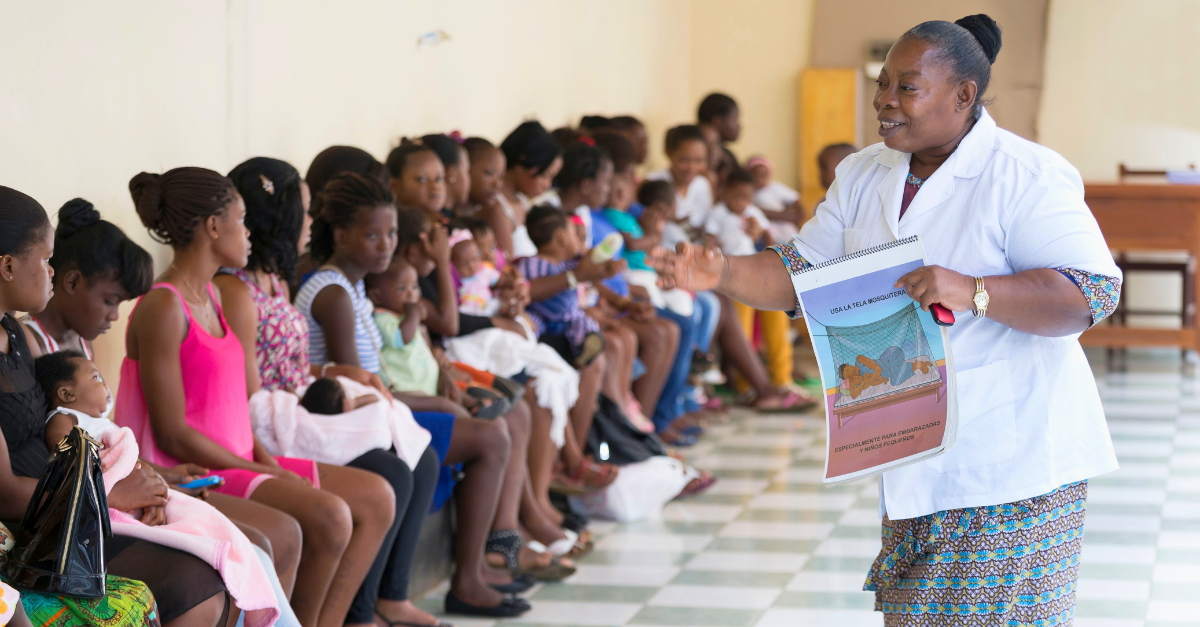
MCD staff provide community health education to patients at a health facility in Malabo, Equatorial Guinea.
Across Equatorial Guinea, mothers, children, families, and communities continue to face a complex and evolving health landscape. High maternal and child mortality, a growing burden of infectious and noncommunicable diseases, the resurgence of tropical diseases, and ongoing epidemic threats all underscore a central challenge: access to quality, timely, and community-responsive health services remains uneven.
Recognizing that strong community health systems are essential to addressing these challenges and achieving universal health coverage (UHC), Equatorial Guinea’s Ministry of Health and Social Welfare (MOH) has embarked on an ambitious effort to reposition and modernize community health nationwide.
In 2025, as part of broader health system strengthening reforms, the MOH, with technical support from MCD Global Health, conducted a comprehensive analysis of community health implementation across the country. The goal was not only to assess what exists, but to identify what works, where gaps remain, and how community health can become a more powerful driver of equitable, people-centered care.
Strong Political Commitment: A Pivotal Moment for Community Health
Community participation is firmly embedded in Equatorial Guinea’s National Health Development Plan (PNDS) and is recognized as a critical pillar of primary healthcare. Over the years, structures have been established at every level of the health system: from the national PHC directorate and district-level PHC units to health facilities, community intervention teams, health posts, and multisectoral coordination mechanisms.
Yet the analysis revealed that while the foundations are in place, the current community health model has not kept pace with the country’s evolving health needs.
Key challenges identified include:
- The absence of a harmonized and forward-looking national community health strategic framework.
- Fragmented, program-specific community approaches rather than an integrated health system response.
- Community service packages that are not fully aligned with population health needs.
- An insufficient number of community-level health personnel, combined with unclear or inconsistent selection criteria.
- A community health information system that remains underdeveloped and underutilized for decision making.
In addition, community engagement has largely focused on awareness-raising and health promotion. While these activities are important, they are not sufficient on their own to drive sustainable health transformation. For community health to reach its full potential, communities must play a more active role by helping to identify priorities, participating in planning and implementation, contributing to service delivery, and holding the system accountable for results.
Promising Signals and Local Innovation
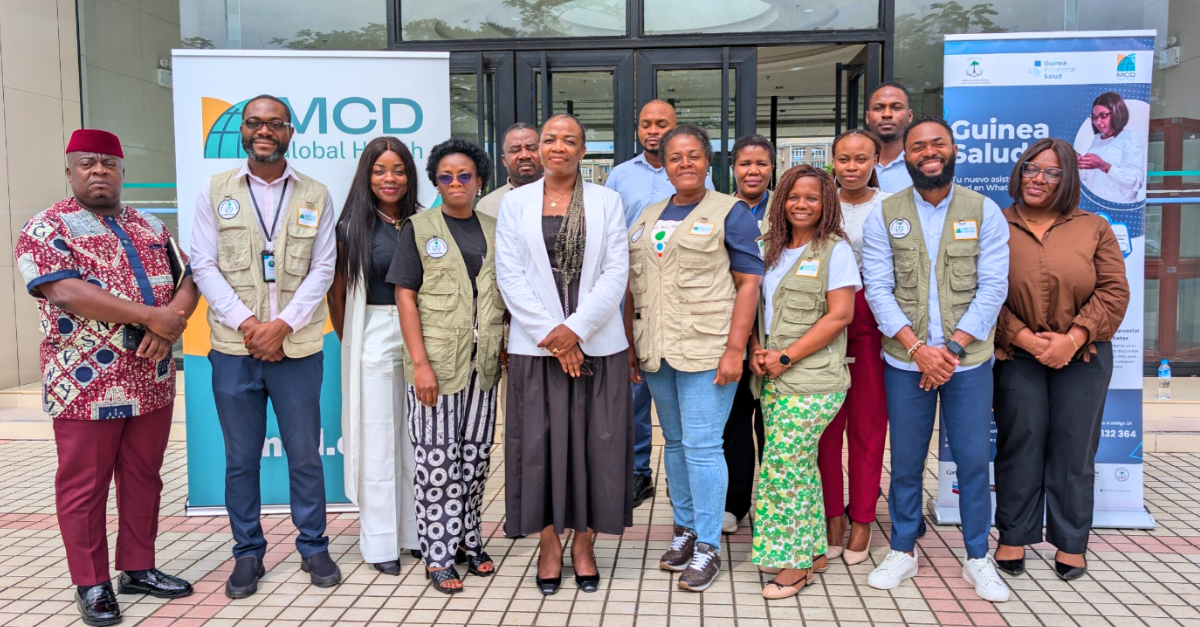
Despite these challenges, the analysis uncovered strengths and opportunities to build upon:
- Strong political will and structured leadership within the MOH.
- Institutionalized community intervention teams with national reach.
- Existing multisectoral platforms that can be revitalized for coordinated action.
- Innovative local practices, such as supervised management of uncomplicated malaria at the community level in select districts.
- The strong performance of the Baney pilot district under the health decentralization framework.
These experiences demonstrate that modernizing community health in Equatorial Guinea is not a distant aspiration, it is an achievable goal. Together, they provide a solid foundation for building a community health system that brings care closer to households, strengthens trust between communities and the health system, and accelerates progress toward the Sustainable Development Goals and UHC.
A Community-centered Reform Agenda
- Reshaping Community Health Governance: The reform calls for moving from scattered initiatives to a coherent national vision that fully integrates community health into the broader health system. This includes developing a national community health strategic framework; establishing a multisectoral coordination and technical platform; harmonizing manuals, guidelines, and tools; and ensuring meaningful engagement of private and faith-based health providers in community health planning and implementation.
- Bringing Care Closer to Home: At the heart of the reform is a simple goal: ensure essential prevention, treatment, and surveillance services are accessible where people live. This will require introducing community-based case management, redefining the role of community intervention teams to better support local actors, and creating a formal community health worker (CHW) framework, which is absent in Equatorial Guinea. This shift recognizes that trained community actors can safely and effectively deliver defined health services when appropriately supported.
- Strengthening System Pillars for Sustainability: A sustainable community health system depends on strong foundations. Priority actions include developing a robust community health information system, strengthening human resources at all levels, integrating CHW supply chains into national systems, and mobilizing domestic financing to support incentives, equipment, and essential supplies over the long term.
- Empowerment, Innovation, and Learning: Recognizing that many effective solutions emerge from the field, the reform emphasizes community empowerment, entrepreneurial skills development, and the promotion of operational research. A national community health research agenda will help generate evidence, elevate local innovations, and inform continuous improvement.
A Phased and Adaptive Path to Scale
Implementation of the reform will follow a phased approach beginning with preparation and adaptation of standard operating procedures, training materials, and guidelines and followed by pilot implementation in selected districts. Lessons learned will inform a gradual national scale-up with a strategic evaluation planned around year five.
This progressive approach allows the model to be tailored to local realities while building institutional capacity and measuring impact over time.
More Than Reform — A Transformation
Modernizing community health in Equatorial Guinea is about redefining how the health system partners with communities; strengthens trust and accountability; brings essential services closer to home; and empowers communities to play a central role in managing and improving their own health.
With strong leadership, committed partners, and communities at the center, Equatorial Guinea stands at a pivotal moment poised to transform community health into a powerful engine for equity, resilience, and universal health coverage.