Adaptive Vector Control Accelerates Progress Against Malaria
February 17, 2026
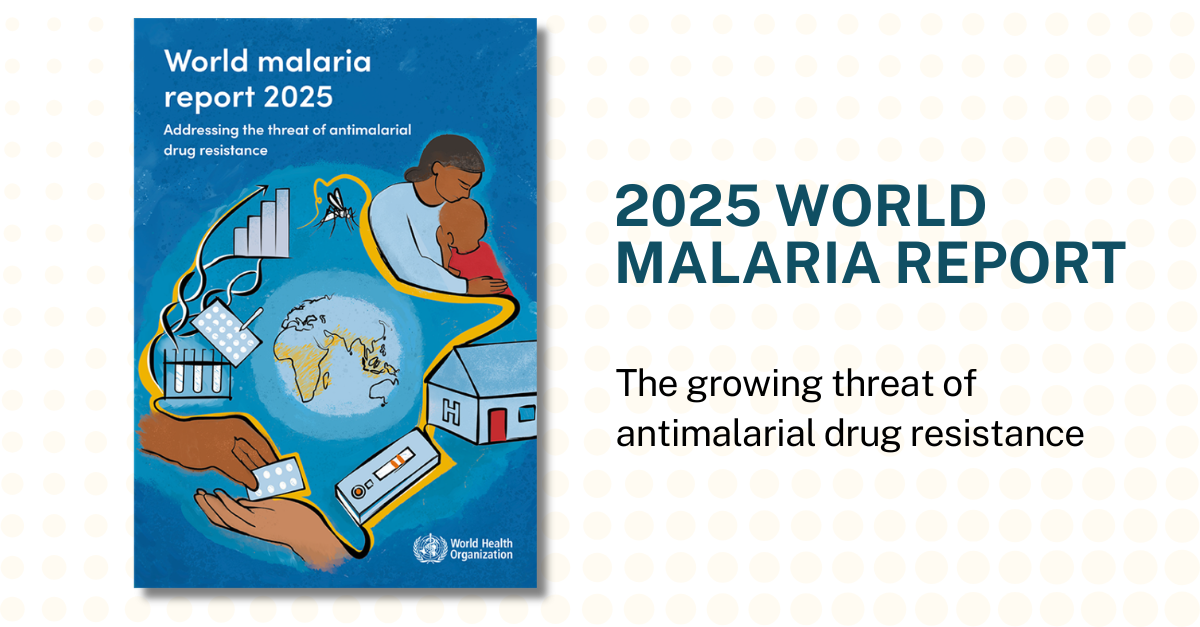
The World Health Organization's (WHO) 2025 World Malaria Report (WMR) described both promising progress in specific areas and significant challenges and setbacks in others. A stark message in the report is that the 2030 targets set by the Global Technical Strategy (GTS) are unlikely to be met, with key indicators of malaria case incidence and mortality significantly offtrack. Many countries, particularly in sub-Saharan Africa, still face stagnation toward reducing their malaria burden. The WHO recognizes the need to urgently scale up resources to support integrated strategies with a toolbox of proven, innovative interventions.
The pipeline for new tools is not only narrow but falls behind the urgency to protect at-risk communities. This underscores the need to scale up existing tools proven to be effective in reducing transmission.
Indoor residual spraying (IRS) is one such tool; however, the WMR shows a steady decline of the number of people at risk who are protected by this life-saving intervention. In sub-Saharan Africa, only 3.2% of the at-risk population received IRS in 2024, the lowest since vector control was expanded across the continent at the turn of the 21st century. The WHO recommends IRS be deployed in areas with ongoing transmission, yet the WMR mentions operational and financial limitations for IRS implementation that ultimately hinder wider coverage.
Recent operational research, published last year by experts at MCD Global Health’s Bioko Island Malaria Elimination Project (BIMEP) in Equatorial Guinea, supported the need to revive IRS through cost-effective approaches in its deployment. While some propose partial IRS as a means for optimizing deployment, the BIMEP’s research investigated alternatives of reducing coverage targets. Current recommended IRS coverage to achieve community protection is at least 80%. In practice, this implies not only the very high costs of insecticides, but also logistical challenges. IRS is labor intensive and often requires several days of covering targeted areas.
By analyzing data, the BIMEP team measured the impact of IRS at different coverage levels using both retrospective and prospective analyses. The findings revealed that reducing the coverage target down to 50% provided a similar effect to the recommended 80% target. On Bioko Island, reducing the IRS coverage target to 50% in urban areas has allowed reinvesting saved resources into complementary interventions, including scaling up larval source management to address residual transmission. This integrated approach expands the overall vector control package to reach more people at risk. In 2025, the annual malaria indicator survey conducted by the BIMEP measured the lowest malaria prevalence in more than 20 years (7.2% of all ages), suggesting the adjustments to the vector control strategy are showing promising results.
The main message from MCD’s experience is the need to innovate the way vector control interventions are delivered. If existing interventions are proven and effective, and resources are finite, optimizing implementation becomes a requirement. If national malaria control programs are to be supported in addressing the gaps toward achieving GTS targets, we cannot afford to wait for a silver bullet. At the same time, MCD recognizes that the next generation of tools, including gene drive technologies, next-generation vaccines, and novel vector control approaches, hold promise for transforming malaria control.
The BIMEP is partnering with leading research institutions to test and validate these innovations. While these tools move through development and regulatory pathways, maximizing the impact of proven interventions is essential to protecting populations at risk. Needing to operate with what is available, a good start is to harness operational research to inform ways to optimize resources and allow for flexibility in the recommended guidelines.
Each endemic setting presents its own challenges and requires tailored strategies adapted according to context. The experience from the BIMEP shows that adaptive malaria vector control is a requirement to accelerate progress against malaria.