Northern Border Rural Workforce

Rural Communities Opioid Response Program

Focus Areas

A woman with glasses on and earbuds talks smiles as she stares at computer as part of training. />

Training

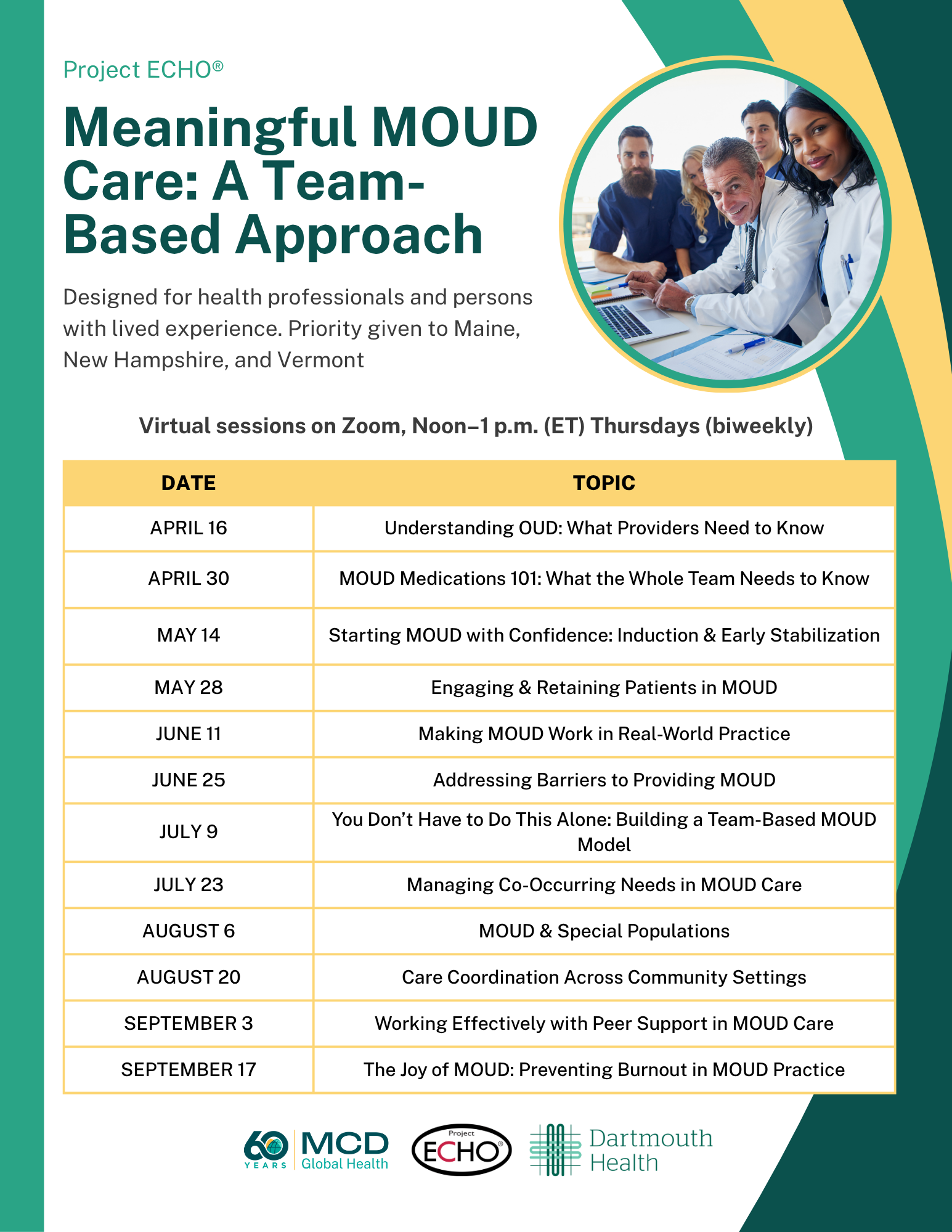
This initiative is expanding education for medications for opioid use disorder (MOUD) prescribers, Master of Social Work (MSW) students, entry level workforce (mental health rehabilitation technician/community (MHRT/C) certification program), and supervisors in evidence-based practices.

Supplemental training in SUD/opioid use disorder (OUD) and evidence-based practices for MSW students and case workers.

Vast number of big meetal pipes going into the horizon with the ocean and sun in background.

Internship and Employment Placement Pipelines

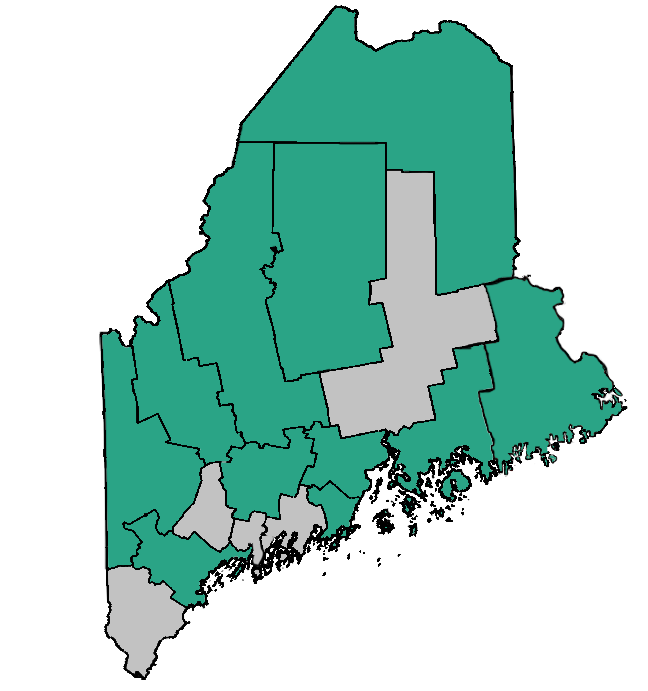
MCD is increasing rural capacity in MOUD by placing trainees with qualified supervisors and offering connections, support, and alignment between training and placement for rural candidates in nursing, social work, psychology, and case management pathways. Interns are working with youth and adults while receiving training and experience in evidence-based practices in rural behavioral health.

A man looks at a computer screen that has numerous people smiling and talking online as a group.

Learning Communities

Ongoing support structures are being built to foster professional growth and peer learning for new prescribers, MSW and psychology students, MHRT/C trainees, and supervisors who work at rural agencies.

green outline of hands putting together a puzzle

Activities

  • Train University of Maine (UMO)'s MSW and graduate-level psychology and rural MHRT/C students in interprofessional, team-based SUD/MOUD, including a community-based MOUD ECHO and design learning modules and experiences for university and MHRT/C trainees.
  • Place UMO's MSW, psychology, and rural MHRT/C students in rural internships supported by stipends for the organization and, in some cases, stipends for the students.
  • Enhance retention of those placements via learning communities to support supervisors of placements and placed students.

The Northern Border Rural Workforce program (NBRW) is supported by the Health Resources and Services Administration (HRSA) of the U.S. Department of Health and Human Services (HHS) as part of an award totaling $1,598,549 with 0 percentage financed with non-governmental sources. The contents are those of the author(s) and do not necessarily represent the official views of, nor an endorsement, by HRSA, HHS, or the U.S. Government. For more information, please visit HRSA.gov.

As a Rural Communities Opioid Response Program (RCORP), MCD's NBRW provides access to a wide range of resources on relevant topics. Inclusion on this webpage does not imply endorsement of, or agreement with, the contents by MCD's NBRW or the Health Resources and Services Administration.