New Research Strengthens the Case for Accessible Cancer Screening
October 22, 2026
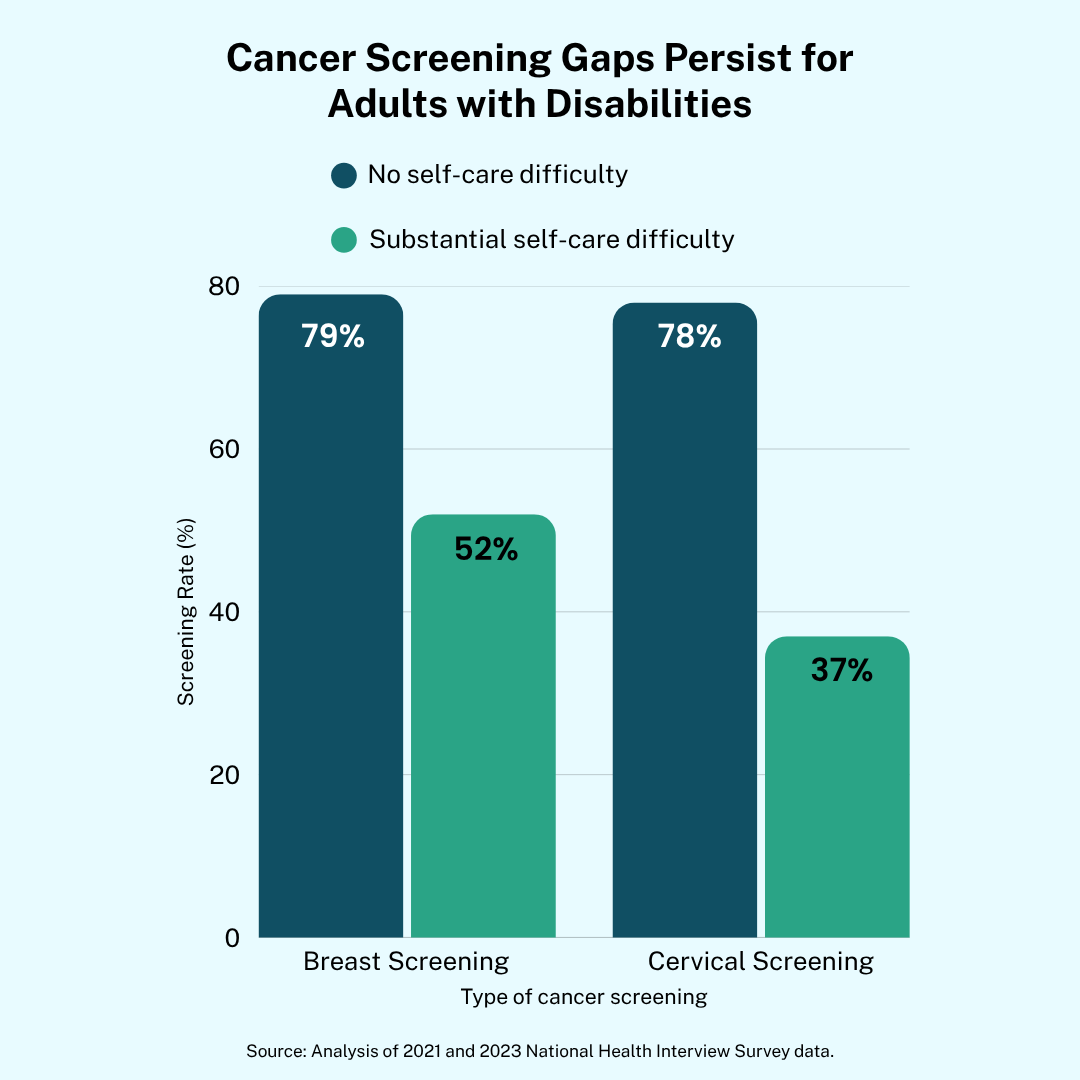
Routine cancer screening can detect disease earlier when treatment may be more effective. Yet, new American Cancer Society research shows that millions of U.S. adults with disabilities are less likely to receive recommended breast, cervical, and colorectal cancer screenings than people without disability-related difficulties.
What the Research Found
Researchers analyzed pooled data from the 2021 and 2023 National Health Interview Survey, examining six disability domains: vision, hearing, mobility, cognition, communication, and self-care. Screening differences varied by disability type and severity, but adults with substantial self-care difficulties experienced some of the largest gaps.
Among people with substantial self-care difficulties, breast screening was 52% compared with 79% among those reporting no difficulty. Cervical screening was 37% compared with 78%. Substantial communication difficulty was also associated with lower cervical screening with 35% compared with 78% among those reporting no communication difficulty.
The study groups represented an estimated 6 million adults eligible for breast screening, 5.1 million for cervical screening, and 11.1 million for colorectal screening.
Turning Evidence into Better Access
The study also shows what can happen when screening is designed around people’s needs. Among adults with substantial mobility difficulties, 22% used stool-based colorectal screening, compared with 16% of adults without mobility difficulties. At-home options may reduce transportation, physical access, and scheduling barriers.
This is more than a promising statistic. It shows that lower screening rates are not inevitable. Flexible methods, accessible equipment and communication, and planned accommodations can remove barriers too often treated as unavoidable.
From Individual Workarounds to Better Systems
Patients can ask which screenings are recommended, request accommodations, explore alternative methods, and bring support when helpful. Screening for All offers plain-language guides, timelines, and an accommodations checklist to prepare for these conversations.
But access should not depend on patients overcoming every obstacle. Healthcare teams can ask about needs early, communicate in accessible ways, assess equipment, document what works, and offer home-based options when clinically appropriate. Screening for All’s practice considerations and quick reference guides help make these actions routine.
Accessible Screening is Quality Care
The research reinforces the approach behind Screening for All: pair evidence about disparities with practical tools for action. Our resources support patients, healthcare professionals, office staff, and administrators, from preparing for an appointment to building accessibility into everyday workflows.
Closing screening gaps requires designing care around real access needs, from scheduling through follow-up. Accessible screening is not an exception or add-on; it is a basic measure of high-quality preventive care.
This program is supported by the U.S. CDC of the U.S. Department of Health and Human Services (HHS) as part of a financial assistance award totaling $974,773.00 with 100% funded by CDC/HHS. The contents are those of the author(s) and do not necessarily represent the official views of, nor an endorsement, by CDC/HHS, or the U.S. Government.