Beyond the Checkbox: Making Disability Accommodation Needs Visible in Electronic Health Records
April 30, 2026
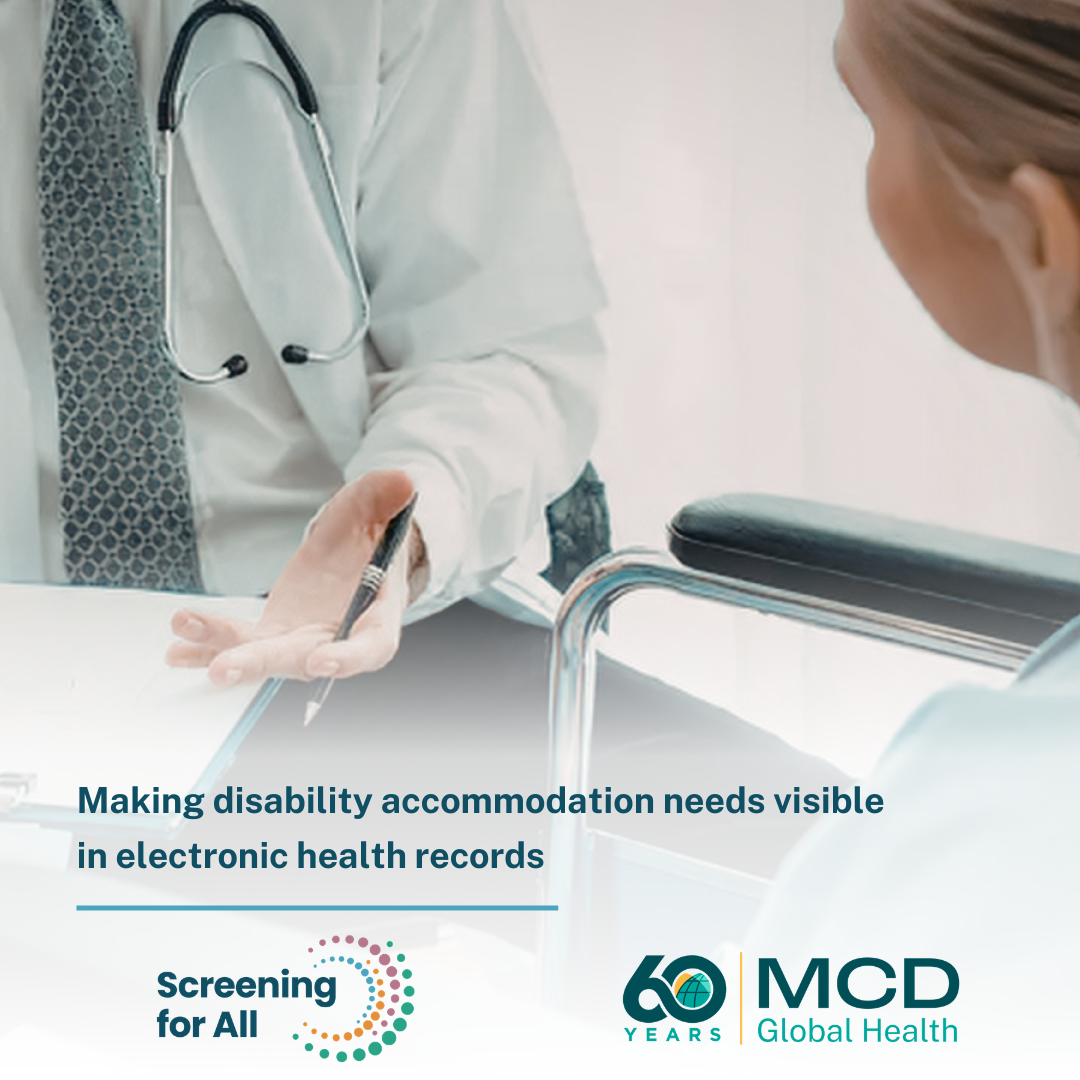
A patient with a disability meets with their primary care practitioner (PCP) and explains that they need extra time, plain-language instructions, and support with positioning for an upcoming screening. The PCP notes this in the referral.
Weeks later, the patient arrives at the screening facility. The screening team appears to have missed the memo. They are not prepared with any of the disability accommodations the patient asked for, and there is no way to put them in place now. Screening will have to wait for another day, or maybe until the patient can find a facility that can better accommodate their needs.
Under the Americans with Disabilities Act (ADA) and Section 504 of the Rehabilitation Act, healthcare organizations are legally required to provide reasonable accommodations when requested by a patient with a disability. So why, in 2026, are facilities still unprepared to accommodate patients’ needs? One reason: There is no consistently implemented, universally adopted approach for most practices to document disability status or accommodation needs in electronic health records (EHRs).
As a result, accommodation planning often lives in staff memory, scattered notes, or one-off intake forms. A patient’s necessary disability accommodations, which directly influence their quality of care, are left hanging in the balance.
A gap hiding in plain sight
EHRs are designed to support continuity and coordination of care. They routinely capture allergies, medications, and demographic information, such as race, ethnicity, and preferred language. Yet disability status and accommodation needs, information that often requires the care team to make advanced arrangements for additional equipment, time, and staff, are rarely documented in a standard, visible way in the EHR. In many clinics, scheduling staff will record patient needs in one system while clinicians use a separate EHR. When this information is not clearly or consistently visible in the EHR:
- Staff are unprepared on the day of the visit,
- Preventive screenings are delayed, incomplete, or never completed, and
- Trust erodes for both patients and care teams.
This gap persists in part because responsibility for disability documentation often falls between compliance, quality improvement, IT configuration, and clinical workflow design.
Why this matters for preventive screenings
Preventive screenings, such as cancer and osteoporosis screenings and routine health questionnaires, often involve tight schedules, specialized equipment, and multiple handoffs between teams. When disability accommodation needs are undocumented or hard to find, even within a single health system, screenings are more likely to fail.
Accessible preventive care depends on preparation. When accommodation needs are documented clearly and consistently, truly inclusive screening becomes a possibility.
A systems problem with real solutions
There is growing recognition across health and disability research that systematically documenting disability status and accommodation needs in the EHR is foundational to equitable care.
One organization leading this work is the Disability Equity Collaborative (DEC). The DEC works with healthcare organizations, advocates, people with disabilities, and researchers to build evidence for and create resources that support inclusive healthcare for people with disabilities.
Free resources on their website include a training for frontline staff on collecting disability status and a foundational implementation guide for healthcare organizations on documenting disability status in EHRs.
The DEC brings together accessibility leaders from across healthcare sectors to inform their work. They successfully advocated to create a disability status and an accommodations data element in federal EHR standards and joined others in recommending the disability status data element be classified as a patient demographic, which would make patient disability status information more visible in the EHR.
Additionally, the DEC recently released, Accessible Healthcare for People with Disabilities: An Implementation Guide for Healthcare Organizations, which gives healthcare organizations a roadmap to build accessibility programs, document disability status and accommodation needs in the EHR, provide accommodations, and establish effective communication practices.
This work is the result of years of research, policy advocacy, and collaboration. Health systems will need to reimagine and restructure their workflow over time to truly improve care for patients with disabilities. But there are several ways to get started today.
A practical place to start
MCD Global Health’s Screening for All has created tools for clinics and patients that can help kickstart these efforts. Our resources can help identify disability accommodation needs and communicate and act on them more consistently.
While standardizing EHRs is an ongoing process, clinics can bridge the gap by locally standardizing how patient disability status and accommodation needs are documented and shared, especially specialist referrals.
Screening for All’s patient-facing tools, such as step-by-step guides explaining what each screening involves and how to communicate support needs in advance, allow individuals to identify what helps them communicate, prepare, transfer, tolerate positioning, or manage sensory and cognitive demands during care.
When these needs are reviewed during intake and documented consistently in the patient chart, they begin to function as a bridge between patient experience and system readiness.
Healthcare practitioners must also build skills in providing disability-inclusive care. To support this, we developed practice considerations and quick reference guides for three key screenings, outlining essential accommodations for patients with disabilities.
While only policy changes will correct the current disjointedness of EHRs, Screening for All’s resources do two important things:
- Promote proactive accommodation planning so a patient’s needs are met on the day of their appointment
- Normalize accommodations as a routine part of preventive care, not special requests
A look ahead
Imagine a future where a patient’s disability status and accommodation needs are documented as standard demographics in their EHR. They travel with them from their PCP to any screening facility without anyone having to ask twice. The screening facility is fully prepared, and the preventive screening goes off without a hitch.
This program is supported by the U.S. CDC of the U.S. Department of Health and Human Services (HHS) as part of a financial assistance award totaling $974,773.00 with 100% funded by CDC/HHS. The contents are those of the author(s) and do not necessarily represent the official views of, nor an endorsement, by CDC/HHS, or the U.S. Government.